
The Audit Timeline That Separates the Reactive from the Ready
With Category 2 registration requirements on the horizon, audits are not a matter of “if” but “when,” for more renewable operations. Entities who consistently move through audits with confidence aren’t the ones who rush at the last minute— they’re the ones who embed readiness into their operational rhythm and have a clear timeline that extends well beyond the audit event itself.
Focusing on a clear, phased audit-prep timeline is a reliable way to stay ahead of findings, eliminate surprises, and reduce operational risk.
Why the Timeline Matters More Than Any Single Task
Preparing for audits using a set timeline isn’t just about building task lists and deadlines. Instead, it’s about creating a risk management framework that keeps compliance efforts from becoming an afterthought.
By aligning organizational rhythms to identified phases, entities achieve:
- Fewer surprises because issues are identified early
- Reduced operational disruption due to well-organized evidence
- More confident teams who can answer auditor questions without hesitation
- Greater resilience through documented, repeatable processes
We recommend the following timeline for most mid-sized renewable operators:
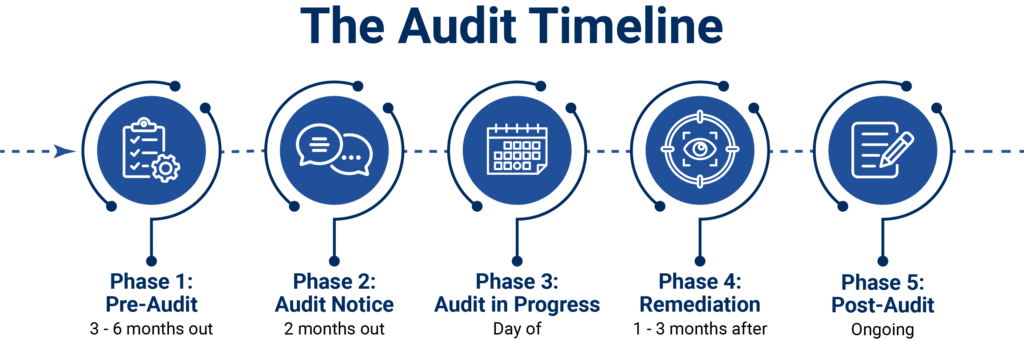
Phase 1: Pre-Audit
This is the phase many facilities put off until Phase 2 forces action but including it in your timeline can set your team up for a successful audit while also reducing the pressure and interfering with normal operational duties. At least 3 to 6 months out, teams should be validating that their program reflects operational reality, not just policy intent.
Core activities during this phase include:
- Internal reviews of documentation, controls, and evidence
- Gap analyses to identify maturity risks
- Beginning evidence collection and version control checks
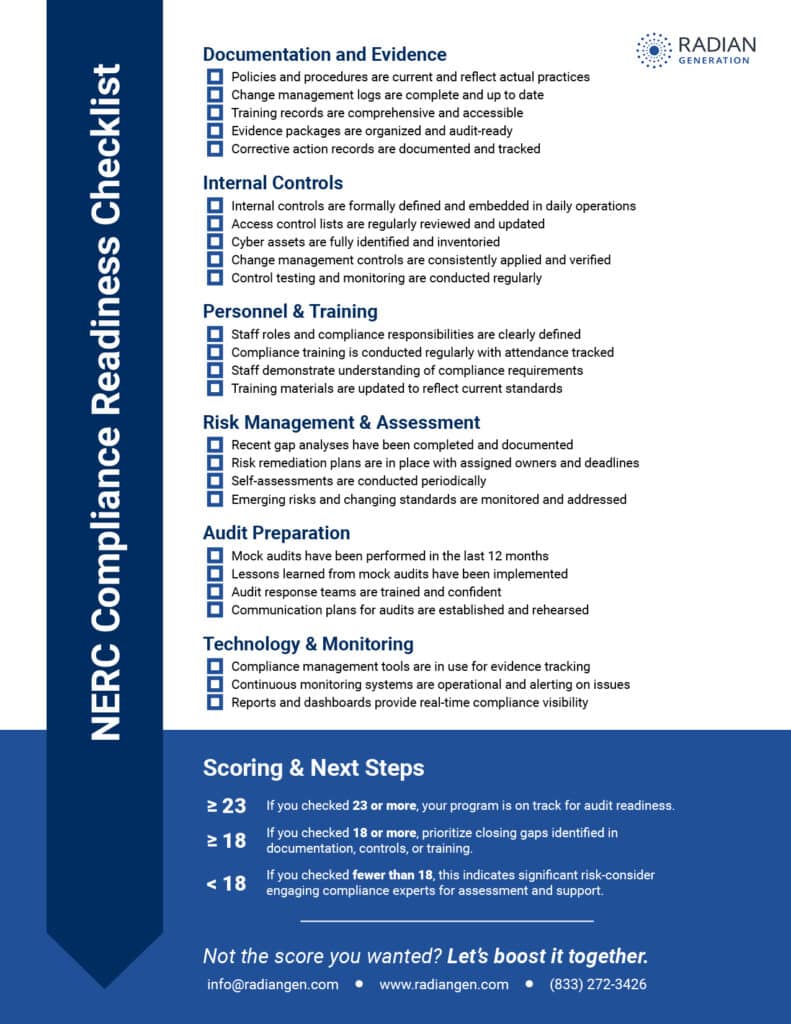
Your checklists emphasize that early readiness hinges on accurate documentation, complete change-management logs, and well-organized evidence packages. Entities who invest in these fundamentals months in advance dramatically reduce the chance of late-stage surprises.
Phase 2: Notice of Audit (2 months out)
Most entities begin reviewing their compliance posture at this phase. Successful audits are possible under this timeline, but are much more labor intensive than if Phase One has been followed.
Key actions include:
- Reviewing the audit scope and assigning owners
- Submitting initial documentation
- Aligning communication and response workflows
Often this is when gaps come to light—outdated procedures, missing training records, or inconsistent control execution. Our experts note that many audit surprises stem from documentation gaps and lack of recent internal testing. Teams that enter Phase 2 with strong pre-audit discipline experience far fewer bottlenecks and much lower stress.
Phase 3: Audit in Progress (Day of + 30 days)
When the audit arrives, this is the moment where precision, clarity, and responsiveness are critical. Auditors will request up-to-date evidence, documentation walkthroughs, and stakeholder interviews.
- Confidence in evidence organization
- Staff who understand their compliance responsibilities and can speak to them clearly
- Controls that are utilized consistently and are supported by tangible records
Team readiness is key and your participating members should be trained, practiced, and aligned in how they answer auditor-style questions. When documentation and people are equally prepared, audits progress smoothly and predictably.
Phase 4: Remediation (1- 3 months after)
Once findings are issued, your team shifts from demonstration to correction. While it is possible to have a perfect audit, it is far more likely that at least one or two issues will be identified, particularly if regulatory compliance is new to your team or operations. Do not be discouraged by any findings— be energized by them. Now is the time to correct any issues and prove to auditors that you are committed to a strong compliance posture.
This phase involves:
- Resolving identified issues
- Submitting final evidence
- Closing corrective action items with clear ownership
Programs that maintain active Corrective Action Plans (CAP) throughout the year—not just during audits—tend to move through this stage efficiently. Make sure that your CAP documentation and previous audit learnings are always current and accessible.
Phase 5: Post-Audit (Ongoing)
The final phase is where organizations turn audits into long-term operational value. Like Phase 1, Phase 5 can be tempting to put off or skip altogether, but the effort put into the phase as soon as the audit concludes— or even concurrent with the audit itself— will provide exponential value for both your operations and any future audits.
While the information is fresh, engage in activities like:
- Recording lessons learned and internal debriefs
- Updating controls, procedures, and training
- Preparing for the next cycle by validating continuous monitoring and evidence systems
As mentioned in Phase 4, keep this documentation easy to access and update it regularly as needed. Continuous improvement ensures that each audit cycle becomes more predictable and less resource intensive.
Start Strengthening Your Next Audit Cycle Today
Audits may come and go, but readiness is ongoing. When teams internalize the timeline as part of their operational cadence, audits transform from a pressure event into a structured review of work already well in hand.
If your next audit window is approaching—or even if it isn’t—now is the perfect time to assess your program’s maturity. To support your planning, download a copy of our suggested timeline and our NERC Compliance Readiness Checklist, which distills the essentials of documentation, internal controls, training, and risk management into an actionable resource.