

Extreme weather highlights the need for fast, accurate reporting in renewable energy asset management. During these high-pressure events, operators must remain laser-focused on site reliability and dispatch, while asset managers face urgent questions about contract performance and financial exposure.
In this reality, manual spreadsheets are too slow and carry too much risk. Centralized software becomes essential to bridge the gap.
When operations and asset management teams use a unified platform, both sides gain real-time access to technical and financial data. This synchronization allows asset managers to answer stakeholder questions immediately, without pulling operators away from their core mission.
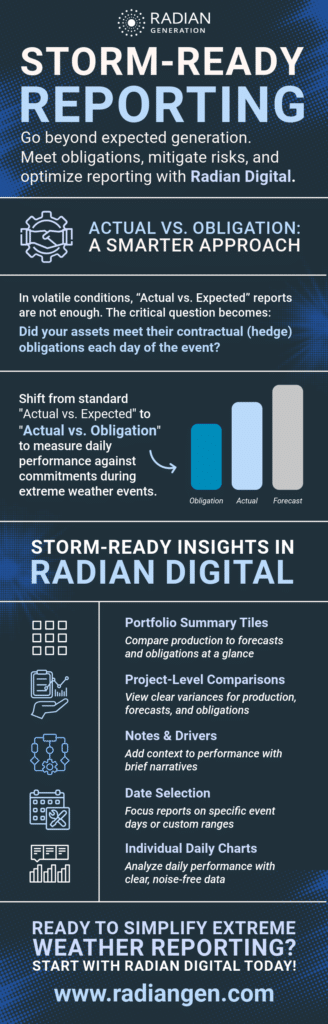
Post-Storm Reporting in One View: Portfolio Outcomes vs. Obligations
The morning after a severe weather event, stakeholders don’t want raw telemetry. Instead, they require a concise, defensible readout detailing how the portfolio performed against critical obligations during the storm window.
Radian Digital offers built-in capabilities to produce repeatable, share-ready reports. These allow you to review performance internally and forward the data externally—including to tax equity investors—without pulling operators off real‑time dispatch.
You can build a single, executive‑friendly view that covers every major project and rolled‑up portfolios of smaller sites by leveraging specific Radian Digital tools.
- Portfolio summary tiles: These tiles allow you to view combined production against project forecasts, compare production to obligations, and analyze actual versus forecasted insolation using your built-in and custom metrics.
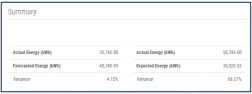
- Project-level comparisons: The platform displays one row per project that lists actual production, original forecasts, and configured obligations, providing clear variances for each metric.
- Notes & drivers: Users can utilize available text fields to capture brief narratives or explanations for specific performance drivers if desired.
- Date selection: You can toggle between standard date ranges or custom selections to focus your reporting specifically on the days of interest surrounding the event.
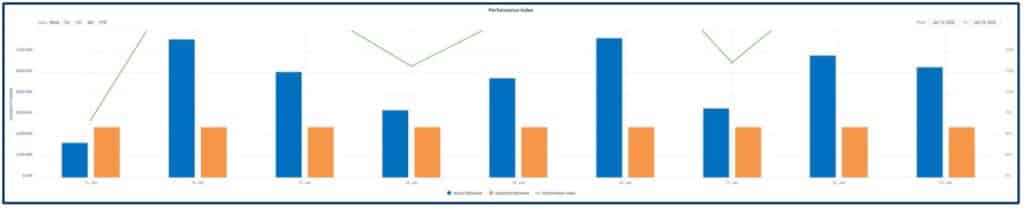
- Individual daily charts: The system generates daily comparisons by project to preserve clear data signals without noise (shown below), or it can provide optional portfolio and group roll-ups for a broader perspective.
Clear Roles, Clearer Reporting
This configuration supports more than just post-event analysis; it facilitates day‑by‑day check‑ins during the storm for asset management. You can even configure the system to schedule morning emails that share daily results automatically.
This automation is vital for maintaining distinct operational roles. It ensures that operators remain focused on real‑time monitoring and immediate dispatch during periods of extreme pricing. By separating reporting duties from operational duties, your team reduces the risk of error and ensures that the people managing the grid are not distracted by administrative demands.
Understanding the Data: Obligation vs. Revenue
It is important to understand exactly what this reporting view provides. Primarily, it answers the first and most critical question: Did we meet our contractual production obligations throughout the event window?
While this view confirms performance against contracts, it does not immediately display the financial settlement. Translating production data into final revenue impact requires a further calculation layer involving market pricing and settlement terms. We will cover this revenue-specific analysis in a later piece, but establishing whether you met your physical obligations is the necessary first step in that financial assessment.
Implementing This Strategy
These views are designed to be configured quickly so you are prepared before the next weather event strikes. For detailed, step-by-step instructions on configuring these reports in Radian Digital Lens, or if you want to discuss best practices for your specific portfolio, reach out to our Support team. We can help you validate your configuration to ensure your reporting is audit-ready when you need it most.